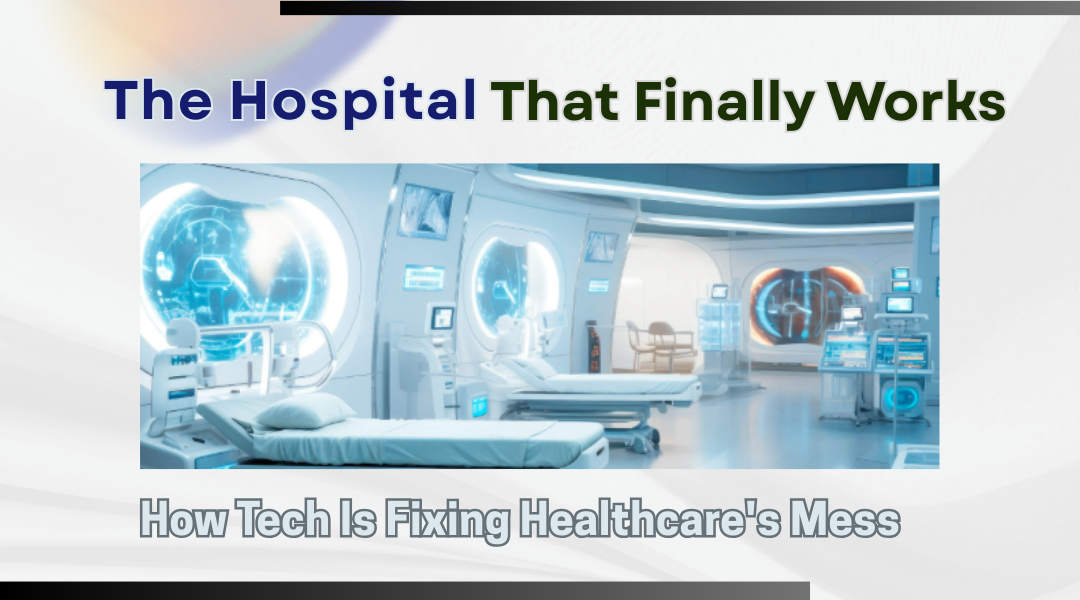
You know what’s broken? Walking into a hospital in 2024.
The front desk can’t find your records. The specialist needs the same blood work done again. Your prescription gets lost between the doctor’s scribbled note and the pharmacy. Meanwhile, some hacker in Eastern Europe is auctioning off patient data from last month’s breach.
But what if it didn’t have to be this way?
Meet the ER That Doesn’t Make You Want to Scream
Picture this:
- You walk in. A camera recognizes your face (the good kind of recognition – you opted in last time). Before you sit down, your doctor already knows:
- Your meds
- That weird reaction you had to contrast dye in 2019
- Even your grandma’s history of breast cancer
- Your new prescription? It’s already at the pharmacy. Not because some overworked nurse faxed it (do fax machines still exist?), but because the system actually talks to itself.
- That MRI you got at the imaging center across town? It’s already in your file. No CDs. No “we’ll call you when we get the results.”
Sound like fantasy? It’s not. Cleveland Clinic is already testing parts of this. Estonia’s had something similar for years.
How Your Phone Could Save Your Life
Here’s where it gets real:
- Your Health = Your Rules
- Right now, your records are scattered like confetti after a parade – some at your GP, some at urgent care, some in a filing cabinet from that one doctor who retired.
- New systems let YOU control it all from an app. Want to share your vaccine history with a new doctor? One tap. Need to hide that embarrassing dermatology visit from your employer’s insurance? Done.
- No More Fake Meds
- In Nigeria right now, they’re using simple SMS codes to verify real malaria pills vs. chalk tablets.
- Imagine scanning your insulin pen at CVS and seeing its entire journey from factory to your hands – with temperature logs proving it never spoiled.
- When Seconds Matter
- Stroke protocols that auto-alert the nearest neurosurgeon the second your scan shows a clot.
- Allergies that pop up in paramedics’ goggles before they give you medication.
The Catch (Because There’s Always a Catch)
This isn’t some Silicon Valley pipe dream. But it’s also not as simple as “just add blockchain”:
- Doctors Hate New Tech (With Good Reason)
- Most EMR systems look like they were designed in 1998 by someone who’d never met a doctor.
- The good news? New systems are being built by actual clinicians – like the Mayo Clinic’s platform that cuts charting time in half.
- Your Data Isn’t Just Yours
- Insurance companies would love to get their hands on your fitness tracker data.
- The fix? Zero-knowledge proofs (fancy math that proves you’re healthy without revealing why).
- Hospitals Move at Glacial Speed
- It took 20 years to get rid of paper charts. This won’t happen overnight.
- But small wins are coming: UCSF now tracks transplant organs on blockchain. Rwanda delivers blood by drone.
The Part That Actually Matters
Here’s the secret no tech bro will tell you:
All this isn’t about making hospitals “futuristic.” It’s about giving nurses more time to nurse. Letting doctors actually look at patients instead of screens. Making sure the right treatment gets to the right person at the right time – without ten phone calls and a fax.
The future isn’t some cold, robotic hospital. It’s finally having a system that gets out of the way so the humans can do what they do best.