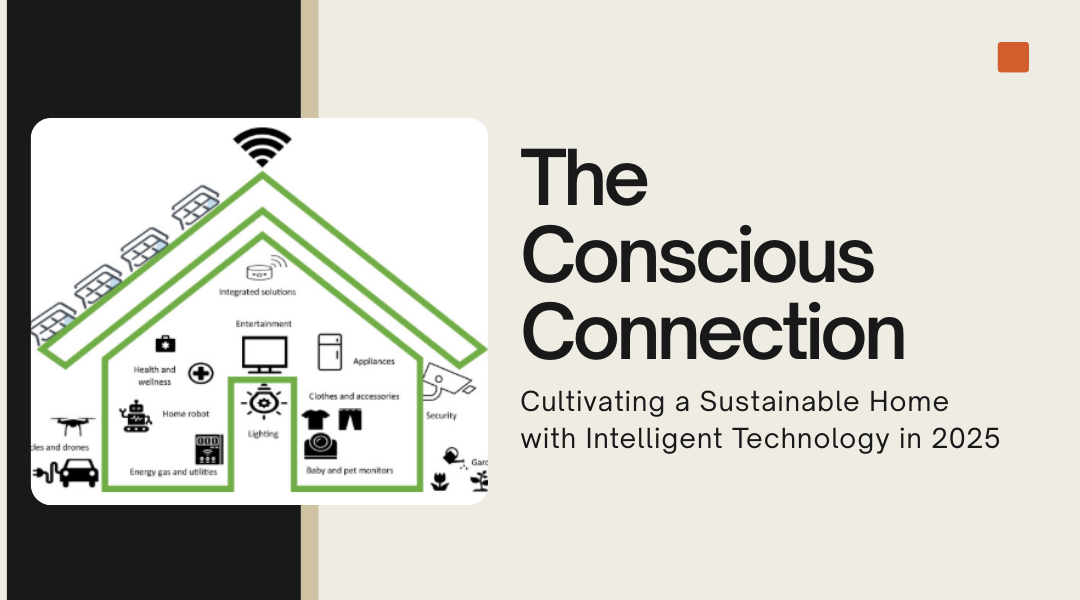
For years, the conversation around smart homes has orbited a central star: convenience. The promise was a life of streamlined tasks and voice-activated comforts. But a quiet, profound evolution is now taking root. In 2025, the most compelling smart home innovations are those that marry this convenience with a powerful, parallel goal: conscientious living. This new generation of technology is shifting the narrative from “What can my home do for me?” to “What can my home do for us?”—where “us” encompasses both the household and the wider planetary ecosystem. We are moving beyond simple automation and into the realm of the eco-conscious abode, where intelligent devices serve as our partners in building a more sustainable, efficient, and harmonious way of life.
This isn’t about austerity or sacrifice. It’s about augmentation—using technology to make sustainable choices the default, effortless, and intelligent path. The modern sustainable home is not a primitive one; it is a highly advanced, deeply connected system that optimizes, conserves, and nurtures with a level of precision that was once unimaginable.
The New Guardians: Intelligent Systems for Resource Stewardship
The most significant environmental impact of any household lies in its consumption of energy and water. The latest smart devices are evolving from passive monitors into active, learning stewards of these precious resources.
The Sentient Thermostat: Beyond Programmed Schedules
The next wave of smart climate controllers, like the Ecobee Omni or Nest Climate Mind, are no longer just programmable timers. They are integrated environmental analysts. By connecting to a network of discreet, solar-powered room sensors, they build a dynamic, real-time thermal map of your entire living space. They understand that the sun heats the south-facing home office in the afternoon, while the basement remains perpetually cool.
Their intelligence, however, extends beyond your four walls. These devices now integrate hyper-local, real-time energy grid data. They can automatically pre-cool your home during off-peak hours when renewable energy (like solar) is most abundant and electricity demand is low, then allow the temperature to drift slightly during the late-afternoon “peak demand” period when fossil-fuel-powered “peaker plants” are often activated. This “grid-assist” functionality, often coupled with utility company rebates, doesn’t just save you money—it actively contributes to a more stable and greener electrical grid for your entire community.
The Aquatic Sentinel: A Holistic Water Management System
Devices like the Flo by Moen 2.0 and the Phyn AquaMind have moved beyond simple leak detection. They are now comprehensive water intelligence systems. Using sophisticated sonar and pressure analysis, they learn the unique “fingerprint” of every water-using appliance and fixture in your home—the specific flow pattern of your shower, the fill cycle of your washing machine, the flush of each toilet.
This allows them to perform three critical functions:
- Micro-Leak Detection: They can identify a dripping faucet or a running toilet that would be inaudible to the human ear, alerting you to waste that can amount to thousands of gallons per year.
- Appliance Health Monitoring: They can notify you that your water heater is showing signs of sediment buildup or that your dishwasher’s pump is beginning to fail, allowing for proactive maintenance that saves water and energy and prevents catastrophic damage.
- Usage Breakdown: They provide a detailed breakdown of your water consumption, not just in gallons, but by cost and carbon footprint, empowering you with the data to make informed changes.
The Circular Kitchen: Where Intelligence Meets Reduction
The kitchen, the heart of the home, is also a hub of potential waste. The latest smart appliances are designed to tackle this issue at its source, promoting a circular economy within your own pantry.
The Refrigerator as a Food System Manager
The 2025 smart fridge, such as the Samsung Food Studio or LG InstaView with Harvest, is a proactive partner in reducing food waste. It employs a combination of internal cameras, weight sensors, and barcode/package recognition to maintain a real-time inventory of its contents. But the true innovation lies in its predictive analytics.
By tracking expiration dates and your consumption patterns, it can send proactive alerts: “The bell peppers will peak in two days. Here are three recipes to use them.” It can then generate a precise shopping list for the remaining ingredients, integrated directly with a local grocery delivery service that uses plastic-free packaging. Some models are even exploring integrated hydroponic drawers for growing herbs like basil and cilantro, closing the loop from storage to fresh production within a single unit.
The Precision Cooktop: Energy-Efficient Culinary Art
Induction cooktops have long been praised for their energy efficiency, but new models like the GE Profile with Smart Sense take it further. Using computer vision from an overhead camera, the cooktop can recognize the size and type of pot placed on it and automatically adjust the heating element to match its base perfectly, eliminating wasted ambient heat.
Furthermore, it can be integrated with your meal-planning app. When you select a recipe, it can guide you through the cooking process with visual cues and, more importantly, automatically calculate and deploy the exact amount of energy and time needed, moving beyond guesswork to precise, minimal-energy cooking.
The Breath of the Home: Purification and Renewal
A sustainable home is also a healthy one, and managing indoor air quality is a critical, yet often invisible, component of eco-living.
The Phytoremediating Air Purifier
The latest air purifiers, such as the Dyson Pure Humidify+Cool™ with Bio-Filter, are moving beyond HEPA filters. The most advanced models now incorporate a two-stage system: a traditional filter for particulate matter (PM2.5) paired with a living, activated carbon layer that is seeded with specific, non-toxic houseplants known for their air-purifying qualities (like certain mosses and ferns). A gentle airflow is passed through this living filter, where the plants naturally metabolize volatile organic compounds (VOCs) from cleaning products, paints, and furnishings.
This creates a more holistic and regenerative purification process. The device monitors air quality in real-time, activating only when needed and adjusting fan speed for maximum efficiency, thereby conserving energy while providing a natural, living filter that you only need to water, not replace.
The Unseen Symphony: The Power of Integration
The true magic of the 2025 eco-smart home is not in any single device, but in their silent collaboration. This is where the “conscious connection” truly comes to life.
- Your water sentinel detects that you’ve started a shower. It communicates with your water heater to ensure optimal temperature is delivered efficiently, and notifies your bathroom ventilation fan to activate based on humidity levels.
- Your smart window sensors detect that you’ve opened windows on a pleasant spring day. They automatically communicate with your sentient thermostat to shut off the HVAC system entirely, allowing for passive climate control.
- Your local weather forecast predicts a sunny afternoon. Your system pre-emptively slightly lowers the blinds on the west-facing windows to reduce solar heat gain, lessening the burden on your air conditioner.
This interconnected web turns a collection of individual gadgets into a single, responsive organism, working in concert to minimize its environmental footprint without sacrificing an ounce of comfort.
Conclusion: A Partnership with the Planet
The eco-friendly smart home of 2025 is a testament to a new philosophy: that technology’s highest purpose is to enable us to live better, not just easier, and to do so in a way that honors our responsibility to the world around us. These devices are more than just tools; they are facilitators of a mindful lifestyle. They provide the data, automation, and insights that make sustainable living an intuitive and integrated part of our daily rhythm, rather than a list of chores.
This journey is not about achieving perfection overnight. It is about making incremental, intelligent choices—choosing a device that not only serves you but also serves a larger purpose. By welcoming these conscious technologies into our homes, we are not just upgrading our living space; we are entering into a proactive partnership with our environment, building a future where our comfort and the planet’s well-being are seamlessly, and intelligently, aligned.