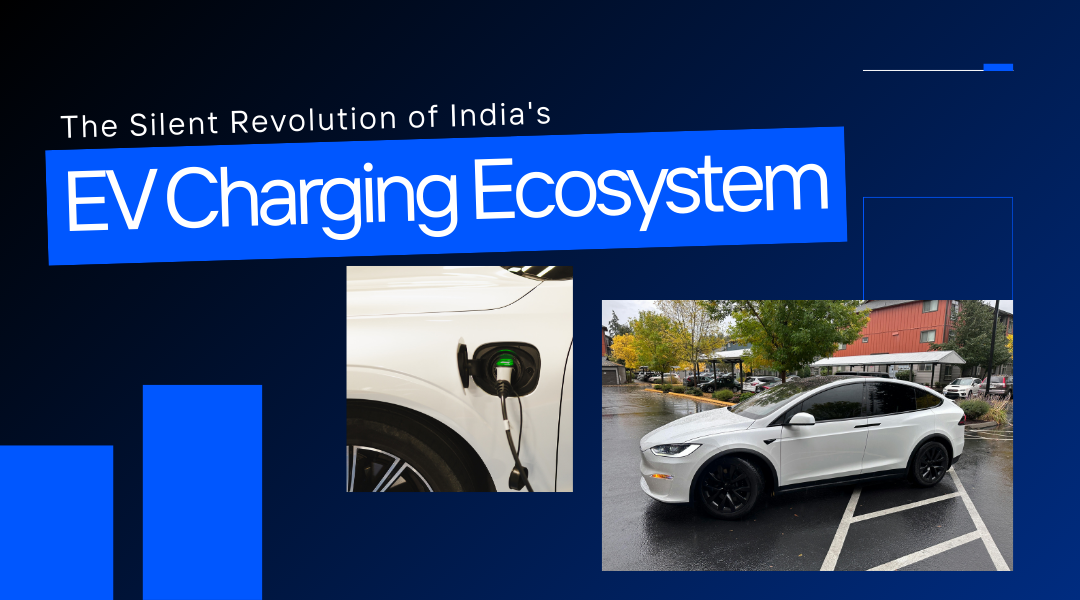
Imagine a future where “refuelling” your car is an afterthought, not an errand. A future where you power up while you work, shop, or sleep, and the cost of “filling the tank” is a fraction of what it once was. This is the promise of the electric vehicle era, a vision steadily transitioning from a futuristic dream to a tangible reality across India. But for this promise to be fulfilled, a silent, sprawling, and intelligent nervous system must be woven into the very fabric of our nation—a comprehensive charging infrastructure.
The conversation has moved beyond the “if” and “why” of electric vehicles to the most critical “how.” How will a country of 1.4 billion people, with its unique tapestry of dense megacities, sprawling suburbs, and vast rural landscapes, keep its future electric fleet moving? The answer is not in a single, monolithic solution, but in a multi-layered, agile, and innovative strategy that is currently being engineered across the country. This is the story of how India is building the plugs, ports, and power networks to fuel its electric destiny.
The Three-Tiered Strategy: Building a Web of Power
India’s approach to EV charging is not a haphazard scattering of points on a map. It is evolving into a sophisticated, three-tiered strategy designed to cater to different needs, locations, and timescales.
Tier 1: The Home Base – The Residential Charging Revolution
The bedrock of any successful EV ecosystem is the convenience of charging where a vehicle rests the longest: at home.
- The Personal Garage Model: For the fortunate few with private parking, the solution is elegantly simple. A slow AC charger, often dubbed an “AC Charging Point” or “Home Charging Station,” becomes a standard household appliance. Installation is straightforward, and the cost of electricity is significantly lower than public charging, especially during off-peak night hours. This is the most cost-effective and convenient method, transforming overnight charging into a seamless habit, much like charging a smartphone.
- Conquering the Apartment Hurdle: The real challenge, and the focus of immense innovation, lies in India’s vast apartment complexes. Recognising this, government guidelines and proactive policies are now encouraging Resident Welfare Associations (RWAs) to facilitate the installation of personal chargers in designated parking spots. Companies are emerging with business models specifically designed to navigate this complexity, offering end-to-end solutions—from handling RWA negotiations and load assessments to installation and maintenance. This is democratizing access, ensuring that living in a high-rise is no longer a barrier to EV ownership.
Tier 2: The Public Pulse – Strategic Charging Hubs
While home charging covers daily needs, public infrastructure is the key to unlocking confidence and enabling longer journeys.
- Destination Charging: This model focuses on placing slower AC chargers at locations where people spend 1-3 hours. Think shopping malls, multiplexes, large office parks, restaurants, and hotels. Here, charging becomes a value-added service. You watch a movie or have a meal, and your car gains a substantial amount of range. This approach efficiently utilizes existing downtime and doesn’t require dedicated waiting.
- En-Route Charging: For inter-city travel and taxi fleets, the need is for speed. This is the domain of DC Fast Chargers. These powerful units, capable of delivering an 80% charge in 30-60 minutes, are being strategically deployed along major national highways, at fuel pumps, and dedicated charging plazas. Companies like Tata Power, Reliance BP, and others are racing to create a recognizable network, much like the branded fuel stations of today. These hubs are designed to be modern pit-stops, offering amenities like cafés and restrooms, making the charging wait productive and comfortable.
Tier 3: The Fleet-First Focus – Powering the Professional Driver
India’s electrification story is being accelerated from an unexpected quarter: the commercial sector.
- E-Rickshaws and Electric Autos: The silent, electric revolution is already dominant on the streets in the form of millions of e-rickshaws and e-autos. Their charging needs are met through a dense, decentralized, and often informal network of small-scale charging points, frequently operated by local entrepreneurs. This grassroots-level ecosystem is a testament to market-driven demand and innovation.
- Ride-Hailing and Logistics Hubs: Companies like Uber, Ola, and large logistics firms are establishing dedicated charging hubs for their partner vehicles. These hubs operate during off-peak hours, ensuring a fully charged fleet is ready for the morning rush. This “fleet-first” approach not only drives volume for charging operators but also ensures high utilization rates, making the business case for public charging more viable, which in turn helps expand the network for private users.
The Invisible Backbone: Technology and Grid Integration
The physical charger is just the tip of the spear. The real intelligence lies in the systems that support it.
- The Digital Layer – Seamless Access: The user experience is being unified through smartphone apps. These applications allow a driver to locate an available charger, check its compatibility and speed, pre-book a slot, make a digital payment, and even monitor the charging session remotely. This digital layer is crucial for eliminating friction and building user trust.
- The Grid Integration – Smart Power Management: A mass of EVs charging simultaneously could threaten to overload the local power grid. The solution lies in “smart charging.” This involves technology that can communicate with the grid and schedule charging for periods of low demand (typically at night), thereby stabilizing the grid and allowing users to benefit from lower tariffs. Looking further ahead, concepts like Vehicle-to-Grid (V2G) are being piloted, where an EV battery can temporarily send power back to the grid during peak hours, transforming cars into a distributed energy resource.
The Blueprint for Growth: Policy as a Catalyst
The government is playing a pivotal role as an enabler and catalyst, not just a regulator.
- FAME II Scheme: The Faster Adoption and Manufacturing of Electric Vehicles (FAME II) scheme provides substantial financial incentives for the installation of public charging infrastructure, directly accelerating the rollout.
- Consolidated Guidelines & Standards: The government has introduced progressive guidelines that de-license the setting up of charging stations, making the process easier for businesses. Crucially, it has mandated compliance with the Bharat Charging Standards, ensuring that all EVs and public chargers can communicate, preventing a compatibility crisis.
- State-Level Initiatives: Many states are offering additional subsidies on electricity tariffs for EV charging and simplifying the process for obtaining power connections for charging stations, creating a more favourable business environment.
The Roadblocks on the Highway
Despite the rapid progress, the path is not without its challenges.
- The Land and Power Conundrum: Securing space for charging plazas in prime urban locations and ensuring adequate electricity connection, especially for fast chargers, remains a significant hurdle.
- The Business Model Puzzle: Achieving profitability in public charging is still a challenge. High upfront costs for equipment and electrical infrastructure, coupled with the current low utilization rates in many locations, make it a long-term investment.
- Maintaining Reliability: As the network expands, ensuring that every charger is functional, well-maintained, and offers a consistent user experience is a massive operational challenge. A non-functional charger is worse than no charger at all, as it erodes public confidence.
Conclusion: A Network in the Making
India’s journey to build a robust EV charging infrastructure is a story of simultaneous construction on multiple fronts. It is a complex dance involving policy makers, power utilities, automotive giants, agile startups, and, most importantly, the early adopters who are placing their trust in this nascent system.
What we are witnessing is not merely the installation of metal boxes and cables. It is the creation of a new utility, as fundamental to the 21st century as broadband internet or mobile networks. This evolving web of power is what will ultimately dissolve “range anxiety” into “charging convenience.” It is the critical enabler that will transform the electric vehicle from a niche, conscientious choice into the default, practical, and irresistible option for the average Indian car buyer. The plugs are being put in place, the grid is getting smarter, and the nation is, quite literally, plugging into a new era of mobility. The future is not just electric; it is intelligently connected.