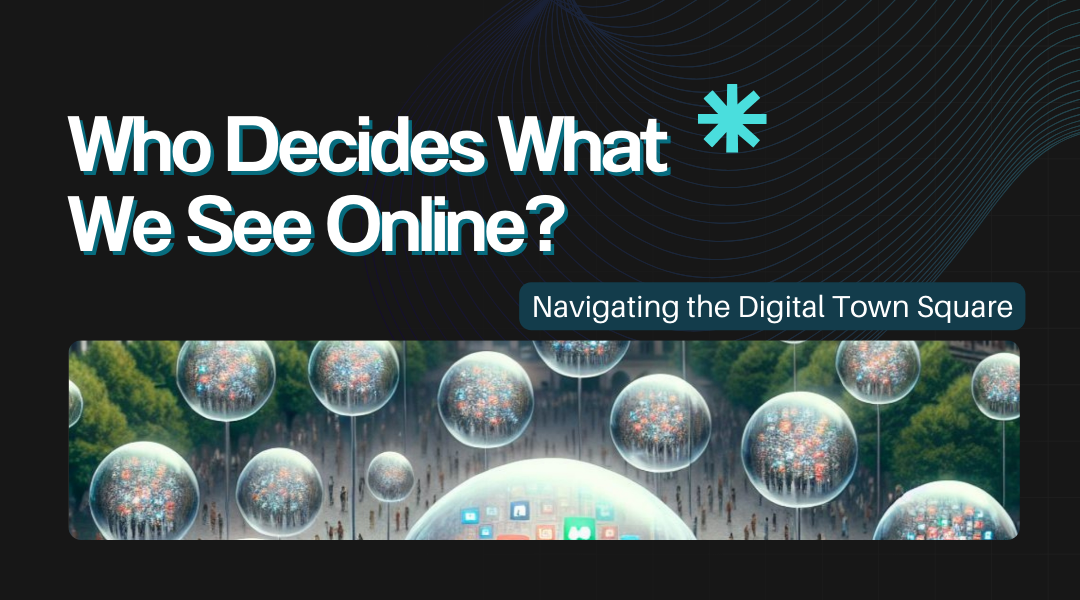
Imagine the internet’s biggest platforms as sprawling, global town squares. Every day, billions of people gather to share news, debate ideas, and connect. But who makes the rules in these squares? This isn’t just a technical question—it’s one of the most pressing social and political challenges of our time. We’re grappling with a fundamental tension: how do we foster open conversation while protecting people from genuine harm?
This exploration dives into the messy, complex world of online content governance. We’ll unpack how platforms make these tough calls, the ethical tightropes they walk, and what it all means for the future of public discourse.
The Mechanics of Moderation: More Than Just a “Like” Button
At its core, content moderation is the behind-the-scenes work of screening user posts. Think of it as a digital filtering system designed to catch the worst of the worst: incitements to violence, hate speech targeting specific groups, graphic imagery, and coordinated disinformation campaigns. The goal is to stop the town square from descending into chaos.
This filtering happens in three key ways:
- The Algorithmic Gatekeepers: Before most content even reaches a wide audience, it’s scanned by artificial intelligence. These systems are trained to recognize patterns—specific keywords, known violent imagery, or even memes associated with banned groups. They work at an impossible scale but often miss the nuance of context and sarcasm.
- The Human Referees: This is where people step in. Teams of human moderators review the content flagged by algorithms or reported by users. They are the ones making judgment calls, interpreting the subtle difference between a threat and a joke, or between legitimate news and clever misinformation. It’s a psychologically taxing job that sits at the heart of the operation.
- The Community Watch: Many platforms, like Reddit and Nextdoor, heavily rely on their own users to police the environment. This crowdsourced model empowers communities to set their own standards, but it can also lead to mob mentality or the suppression of minority viewpoints.
A Real-World Glimpse: How YouTube Manages the Flood
Consider YouTube, where over 500 hours of video are uploaded every minute. Its moderation system is a multi-layered beast. AI scans every upload against a database of copyrighted material and known extremist content. Yet, when a controversial video on a sensitive topic like vaccine efficacy goes viral, it’s often a human team that makes the final call on whether it violates policies on medical misinformation. The sheer volume means mistakes are inevitable, leading to public outrage when a video is wrongly removed or, just as often, when a harmful one slips through the cracks.
The Immense Hurdles in Keeping the Peace
Moderating at this scale isn’t just difficult; it’s arguably impossible to do perfectly. The challenges are immense:
- The Tsunami of Content: The sheer number of posts, comments, and videos uploaded every second is staggering. No army of human moderators could ever review it all. This reliance on imperfect AI leads to frequent errors—both the removal of legitimate speech (false positives) and the failure to catch blatant violations (false negatives).
- Case in Point: TikTok struggles immensely with this. A dance video using a popular song might be mistakenly flagged for copyright, while a subtly hateful rant couched in metaphor might evade detection for days, allowing it to amass millions of views.
- The Context Conundrum: Can an algorithm understand satire, historical analysis, or educational content? A documentary about war may contain graphic violence, while a clip from a horror film might look identical to a real-life atrocity. Human language is filled with irony and cultural references that machines consistently fail to grasp.
- The Global Patchwork of Laws: A platform operating worldwide must navigate a labyrinth of conflicting national laws. What is protected free speech in one country may be illegal hate speech in another.
When Does Protection Become Suppression? The Censorship Debate
This is the million-dollar question. The line between responsible moderation and outright censorship is blurry and hotly contested.
- Censorship is typically about control, often by a state authority, to suppress ideas and criticism it finds threatening.
- Content Moderation is (in theory) about safety, conducted by platforms to protect users from harm.
The trouble starts when these concepts overlap:
- State Pressure: Governments are increasingly strong-arming platforms. For instance, in India, Twitter has legally been compelled to remove content critical of the government during periods of social unrest. In Turkey, platforms like Wikipedia have faced blocks for articles challenging the official state narrative. In these cases, moderation is no longer about community safety but about political compliance.
- The Accidental Bias of Corporations: As private companies, platforms have their own rules. The concern is that these rules can be applied unevenly, effectively censoring certain viewpoints. There’s a persistent debate over whether these companies have an inherent bias, conscious or not. For example, during the Israel-Hamas conflict, both sides have accused platforms like Instagram and X (formerly Twitter) of systematically suppressing their content, highlighting the near-impossibility of appearing neutral in a polarized world.
A Defining Moment: The Capitol Riot of January 6th
The events of January 6, 2021, in the United States serve as a stark case study. In the weeks leading up to the riot, platforms were used to organize and spread the false narrative of a “stolen election.”
In the aftermath, the platforms took unprecedented action. Facebook, Twitter, and YouTube made the seismic decision to suspend the sitting President of the United States, Donald Trump, citing the risk of further incitement of violence.
- The Impact: This moment was a watershed. It demonstrated that platforms held immense power to shape political reality. For supporters, it was a necessary act of responsibility. For detractors, it was an alarming display of corporate censorship over political speech. It forced a global conversation: if a president can be de-platformed, who truly holds the megaphone in the digital age?
Charting the Path Forward: A Conclusion
So, where does this leave us? The dilemma is not going away. We cannot have completely unmoderated spaces, as they quickly become toxic and dangerous. Yet, we must be vigilant against systems of control that stifle dissent and debate under the guise of protection.
Finding a way forward requires a few key principles:
- Radical Transparency: Platforms must be clearer about their rules and how they are enforced. Who are the moderators? What are the specific guidelines? The current opaque systems breed distrust.
- Meaningful Appeal: Users must have a real, human-reviewed process to challenge content removal decisions, moving beyond automated, dead-end responses.
- Shared Responsibility: Ultimately, the health of our digital town squares isn’t just the job of tech companies. It requires engaged users, smart regulation that protects free expression, and a public that is critically literate about the information it consumes.
There is no perfect solution, only a continuous and necessary struggle to balance two fundamental human needs: the need for safety and the desire for freedom. How we manage this balance will profoundly define our shared digital future.